Why I’d Rather Build an Offline AI Storyteller Than Buy One
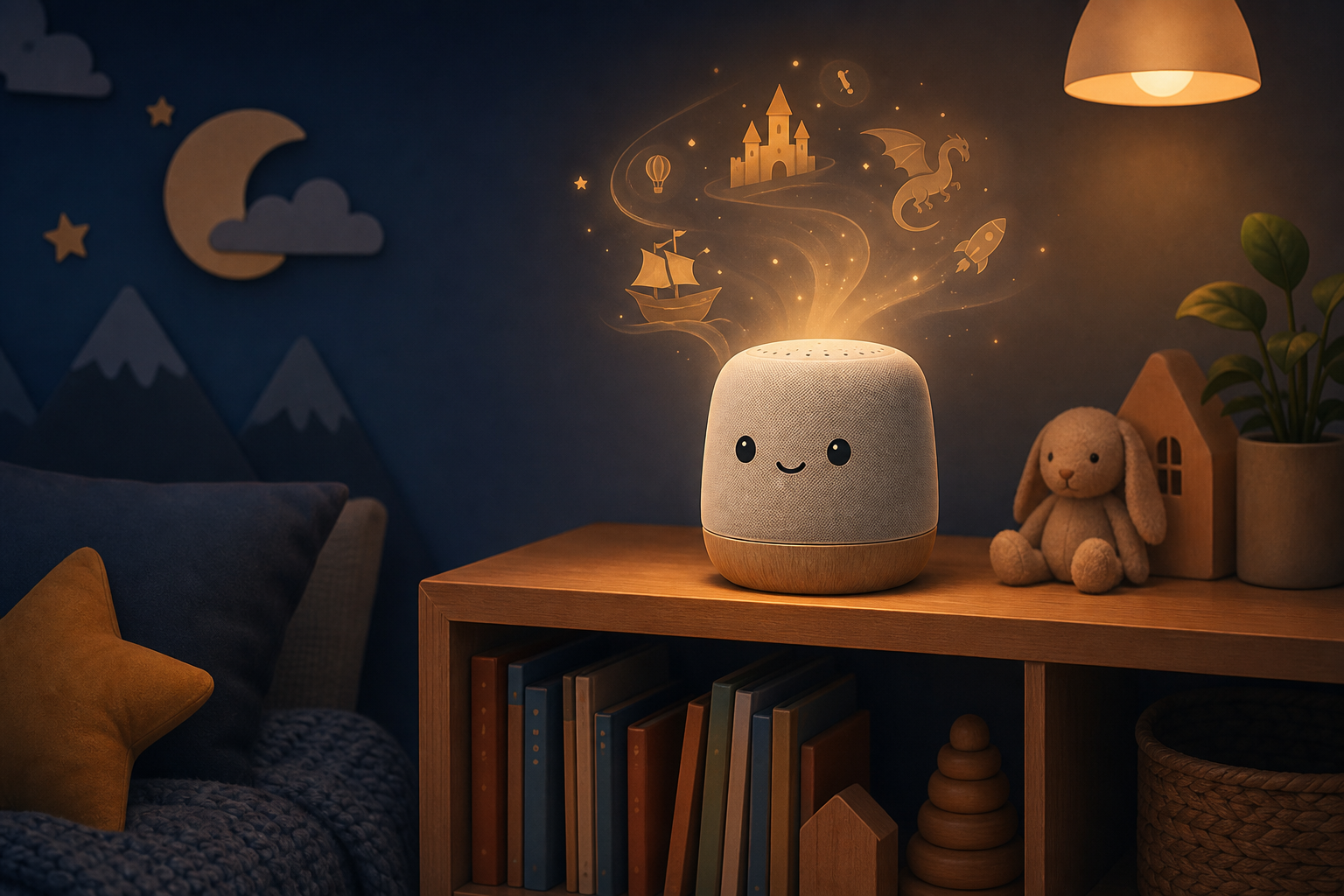
A few days ago I stumbled across an AI-powered storytelling device for kids. It looked great—nice industrial design, interactive stories, voice input, the whole package.
Then I saw the price.
Instead of thinking “Should I buy one?”, my brain immediately went somewhere else.
“I already have an old PC lying around… could I build this myself?”
That’s probably the engineer in me.
The more I thought about it, the more interesting the idea became. Not because I wanted to save money, but because I realized this isn’t really about building a storytelling device. It’s about something much bigger.
For the last few years, we’ve become used to thinking of AI as something that lives on someone else’s servers. You open ChatGPT in a browser, generate an image online, or use an AI coding assistant connected to the cloud. AI has become a service that we rent.
But that’s beginning to change.
Today, even modest hardware can run surprisingly capable language models locally. A Raspberry Pi 8GB can run smaller models, and an old desktop with a GTX 1060 can comfortably power a voice-based AI assistant. That’s exciting because it changes where AI can live.
Instead of opening a website, you can build a device.
Imagine a child walking up to a small speaker and saying,
“Tell me a story about a tiger who wants to become an astronaut.”
A few seconds later, the story begins.
Halfway through, the AI asks,
“Should the tiger visit Mars or Saturn?”
The child chooses.
The story changes.
Tomorrow the same prompt leads to a completely different adventure.
No subscription.
No internet.
No cloud API.
Just a small computer sitting on a bookshelf.
The more I thought about it, the more I realized the storyteller is actually the least interesting part of the project.
Once you’ve built the hardware and the AI pipeline, changing the personality is just software.
Today it’s a storyteller.
Tomorrow it’s a science teacher explaining gravity with household objects.
Next week it’s a Python tutor.
A month later it’s helping children learn electronics by controlling LEDs and motors connected to the same Raspberry Pi.
The hardware never changes. Only the AI’s role does.
That, to me, is where local AI gets really exciting.
There’s another reason I like this idea, especially in India.
A lot of AI hardware products are designed for Western markets and sold at premium prices. By the time they’re available here, they often cost more. For many families, that’s difficult to justify.
But if you’re someone who enjoys building things, that same budget can buy the hardware needed to create something that’s completely your own.
More importantly, you understand every part of it.
You know how speech recognition works.
You know how the language model generates responses.
You know how the speakers, microphones, and software fit together.
And if something doesn’t work, you can fix it instead of waiting for a firmware update.
That’s something no commercial product can sell you.
As someone who’s spent years building engineering tools and AI systems, I’ve started finding these edge AI projects far more interesting than yet another chatbot running in a browser.
They remind me why I became an engineer in the first place.
Not to consume technology.
To understand it.
So I think my next weekend project is decided.
I’m going to turn an old computer into an offline AI storyteller.
Not because it’s cheaper than buying one.
Because I suspect I’ll learn far more by building it than I ever would by taking one out of a box.